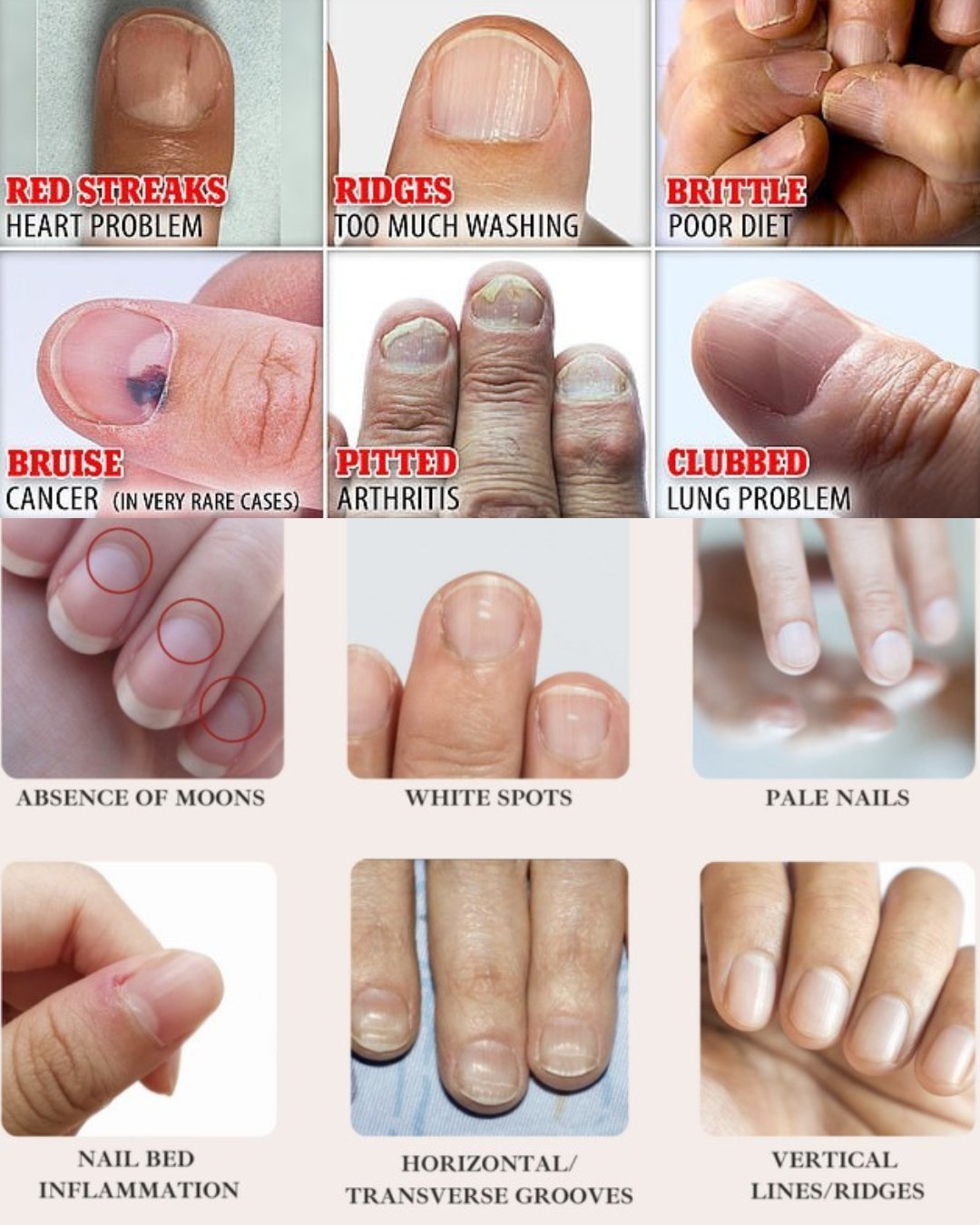
5. White Spots on Nails
What It Means
White spots on nails, known as leukonychia, are common and often harmless. They can result from:
- Minor Trauma: Bumping or hitting the nail can lead to temporary white spots.
- Allergic Reactions: Reactions to nail polish or other chemicals can also cause discoloration.
- Nutritional Deficiencies: In some cases, white spots may indicate a lack of zinc or other nutrients.
What to Do
If the white spots are persistent or accompanied by other symptoms, consider evaluating your diet and consulting a healthcare professional for advice.
6. Nail Pitting
What It Means
Nail pitting involves small depressions or indentations on the nail surface. This condition can be associated with:
- Psoriasis: A skin condition that often affects the nails, causing pitting and discoloration.
- Alopecia Areata: An autoimmune disorder that results in hair loss and can affect nails.
- Other Skin Conditions: Eczema and dermatitis can also lead to nail changes.
What to Do
If you experience nail pitting, consult a dermatologist for a proper diagnosis and treatment options tailored to your specific condition.
7. Hangnails and Cuticle Issues
What It Means
Hangnails and cuticle problems can indicate a lack of moisture or nutritional deficiencies. Common causes include:
- Dehydration: Lack of hydration can lead to dry skin and nails.
- Nutritional Deficiencies: Insufficient intake of vitamins and minerals, particularly B vitamins and zinc, can weaken nails and cuticles.
- Environmental Factors: Frequent exposure to water or harsh chemicals can lead to hangnails and damaged cuticles.
What to Do
To prevent hangnails and protect cuticles, keep your hands moisturized and avoid biting or picking at them. Consider incorporating a balanced diet rich in vitamins and minerals.
8. Nail Fungus
What It Means
Nail fungus (onychomycosis) is a common condition that can cause nails to become discolored, thickened, and brittle. It often occurs due to:
- Moist Environments: Fungi thrive in warm, damp conditions, making it essential to keep feet dry and clean.
- Weakened Immune System: Individuals with compromised immune systems are more susceptible to fungal infections.
What to Do
If you suspect a fungal infection, consult a healthcare professional for diagnosis and treatment options. Antifungal medications may be necessary to clear the infection.
9. Nail Biting and Its Implications
What It Means
Nail biting, or onychophagia, is a common habit that can be linked to stress, anxiety, or boredom. This behavior can have several implications for health:
- Infection Risk: Biting nails can introduce bacteria and fungi into the nail bed, leading to infections.
- Nutritional Deficiencies: Nail biting may indicate underlying anxiety or stress that can affect overall health and nutrition.
